Jun 26, 2026About product
COB vs SMD LED Strips: Key Differences Explained
LED strip lights come in various technologies, with COB (Chip-on-Board) and SMD (Surface-Mounted Device) being two of the most popular.
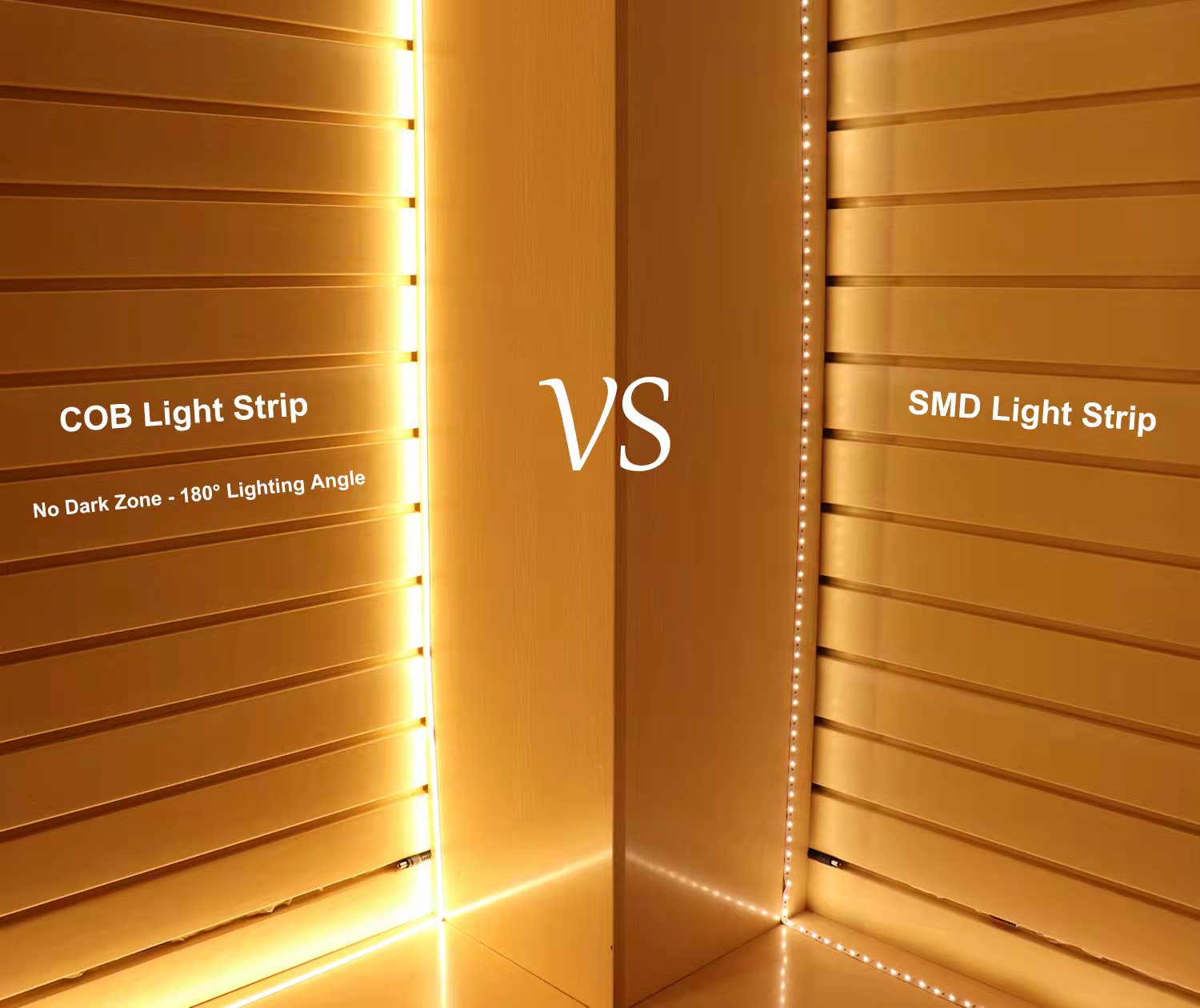
LED strip lights come in various technologies, with COB (Chip-on-Board) and SMD (Surface-Mounted Device) being two of the most popular. While both provide energy-efficient lighting, they differ significantly in design, performance, and application. Here’s a detailed comparison:
1. Technology & Construction
- COB LED Strips
- Uses multiple LED chips bonded directly to a circuit board, creating a seamless light-emitting surface.
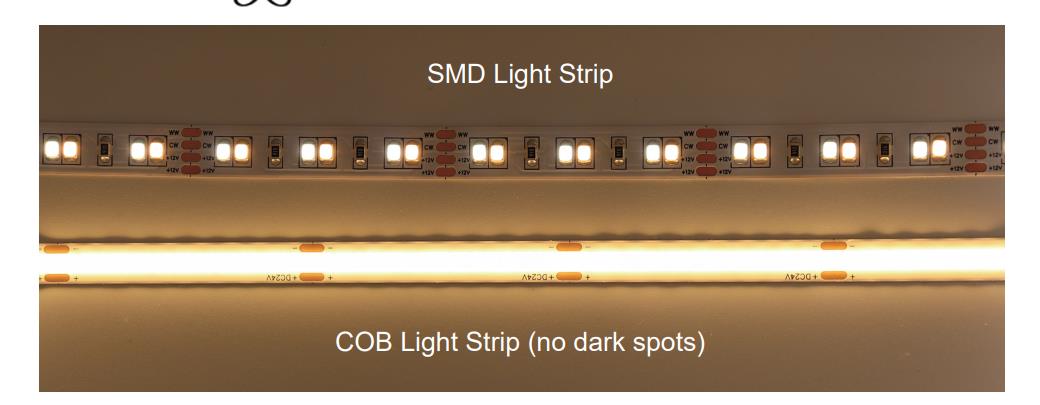
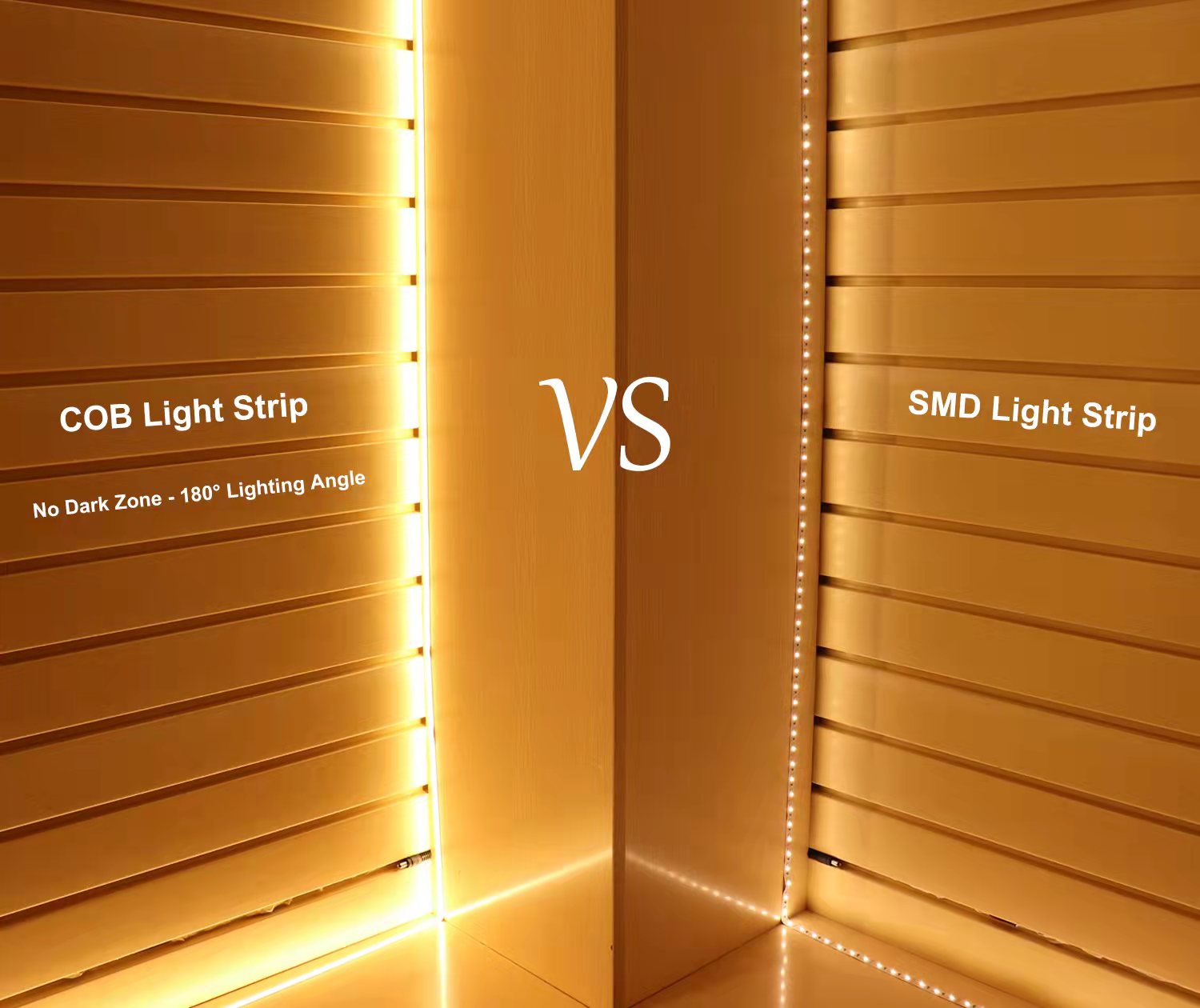
- No individual diodes visible—light appears as a smooth, uniform "line" of illumination.
- Typically uses a single, high-power COB module per segment.
- SMD LED Strips
- Features discrete LED chips (e.g., SMD 2835, 5050, or 3528) mounted individually on the strip.
- Diodes are visible as distinct points of light when unlit.
- Available in various densities (e.g., 60, 120, or 240 LEDs per meter).
2. Light Quality & Performance
- COB Strips
- Superior uniformity with no "dotting" effect (ideal for glare-free applications).
- Higher lumen density in a compact design.
- Better heat dissipation due to integrated packaging.
- SMD Strips
- May show visible light spots, especially at close range or with lower-density strips.
- Flexible brightness control (e.g., single-color, RGB, or tunable white).
- Wider variety of color temperatures and CRI options.
3. Applications
- COB Strips Excel In:
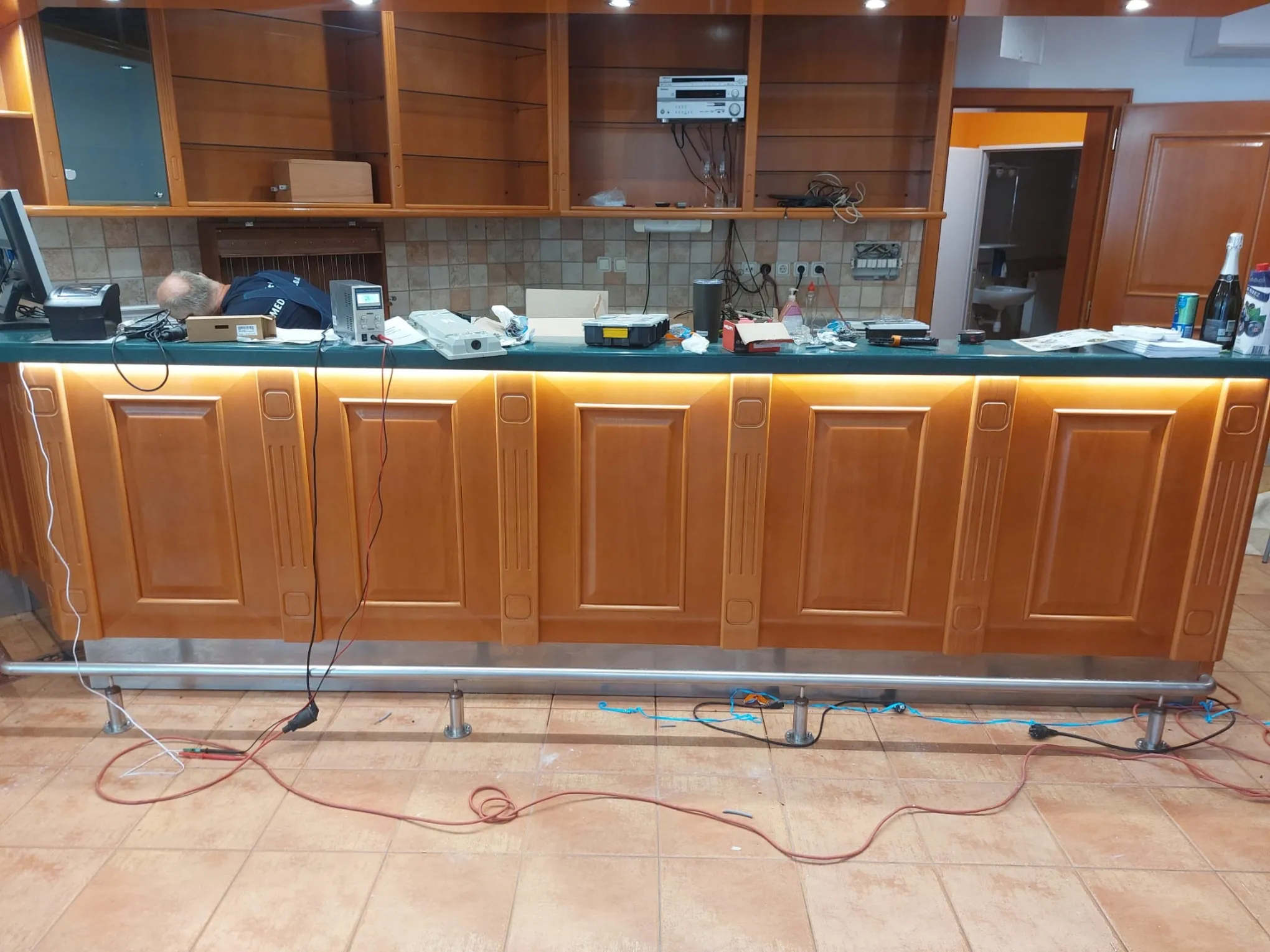
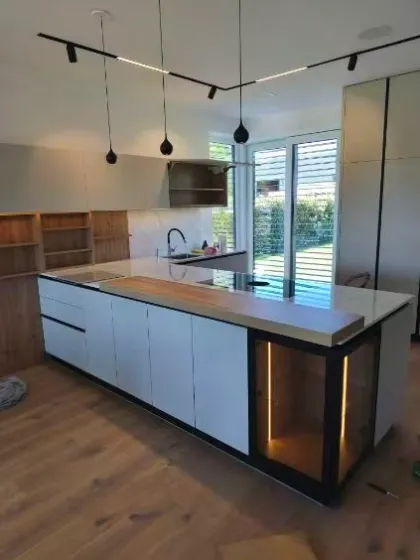
- Architectural lighting (coves, niches) where seamless light is critical.
- Retail displays, museums, or high-end interiors demanding premium aesthetics.
- Task lighting where shadow reduction matters.
- SMD Strips Are Better For:
- Decorative lighting (e.g., RGB color-changing effects).
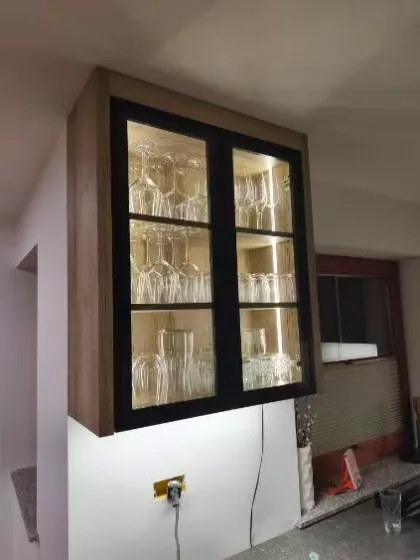
- Backlighting TVs, cabinets, or signage where individual diodes aren’t noticeable.
- Budget-friendly projects with standard brightness needs.
4. Durability & Cost
- COB
- Longer lifespan (up to 50,000+ hours) due to robust construction.
- Higher initial cost but offers better value for professional applications.
- SMD
- More affordable and easier to replace/cut-to-length.
- Slightly shorter lifespan (typically 30,000–50,000 hours).
Conclusion
Choose COB strips for flawless, high-end lighting where uniformity is key. Opt for SMD strips for versatility, color options, and cost efficiency. Both have unique strengths—your choice depends on the project’s demands!